
Welded plate heat exchanger
Release time:
2025-08-27
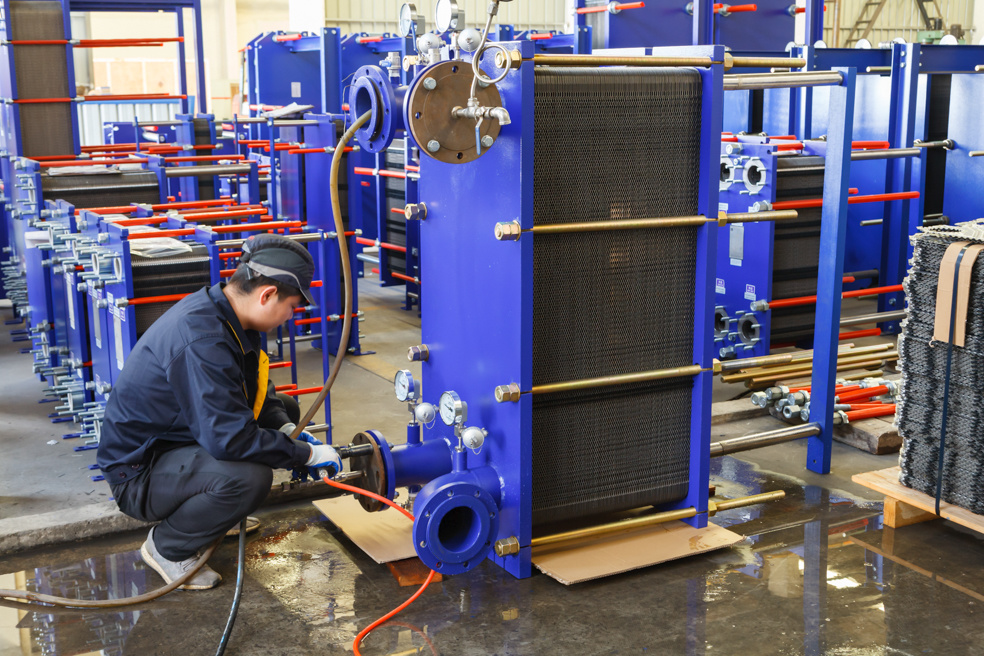
Welded plate heat exchangers are highly efficient heat exchange devices that play a key role in numerous industrial sectors.
Welded plate heat exchangers are highly efficient heat exchange devices that play a key role in numerous industrial sectors.
1. Efficient Heat Exchange Performance
Welded plate heat exchangers utilize a unique plate design, creating narrow flow channels between the plates. This structure creates intense turbulence as the hot and cold fluids flow between the plates, significantly improving heat exchange efficiency. Compared to traditional heat exchangers, they achieve higher heat transfer rates within a smaller footprint, saving installation space. Whether in the chemical, pharmaceutical, food processing, or HVAC industries, they can efficiently meet diverse heat exchange needs.
2. Sturdy and Durable Structure
Welding Process
The plates are connected by welding, which ensures a high degree of sealing and effectively prevents fluid leakage. The welded structure is robust and operates stably even under high temperatures, high pressures, and complex fluid conditions.
Material Selection
Appropriate materials, such as stainless steel and titanium alloy, can be selected based on the application. These materials offer excellent corrosion resistance, resisting the erosion of various corrosive fluids and extending the service life of the equipment.
3. Flexible Design and Adaptability
Various Layouts
The welded plate heat exchanger is available in a variety of layouts, each suited to varying flow, temperature, and pressure requirements. By optimally combining the number of plates and layout, it can be customized to meet specific customer needs.
Multi-Fluid Compatibility
It can handle a wide variety of fluids, including but not limited to water, oil, steam, and refrigerants. Whether it's heat exchange between refrigerant and cooling water in refrigeration systems or heat transfer between different process fluids in chemical processes, it excels.
4. Easy Maintenance
Despite its compact design, the welded plate heat exchanger was designed with ease of maintenance in mind. The plates can be easily removed and inspected for maintenance or cleaning, ensuring the equipment remains in optimal operating condition for the long term.
Latest News
Stainless Steel Pressure Vessel: Vertical Buffer & Separation Tank for Industrial Process
This article introduces vertical stainless steel pressure vessels, including their structural characteristics, fabrication standards, core functions and common working scenarios. Manufactured from stainless steel plates, this type of pressure vessel can be used for gas-liquid separation, medium buffering, temporary storage and steady flow regulation under pressure.
2026-09-22
Shell and Tube Heat Exchanger: Tubular Heat Exchanger for Hydraulic Oil Cooling
This article introduces the structure, working principle, advantages and application scope of shell and tube heat exchangers. This tubular cooler adopts copper heat transfer tubes inside the shell, featuring reliable pressure resistance and good heat transfer performance, commonly used for cooling hydraulic oil and lubricating oil in machinery.
2026-09-22
Industrial Plate Heat Exchanger: Features, Performance and Application Benefits
Plate heat exchangers have become mainstream thermal exchange equipment in modern industrial systems due to their compact structure, outstanding heat transfer performance and flexible modular design. This article focuses on the performance characteristics, structural design, practical advantages and diverse industrial applications of industrial plate heat exchangers, providing a professional reference for industrial heating, cooling and waste heat recovery projects.
2026-09-22
This article introduces the structural features, working principle, core advantages and application scenarios of demountable plate heat exchangers. Featuring high heat transfer efficiency and convenient disassembly & maintenance, this equipment is widely used in various industrial heat exchange processes.
2026-09-22
GET A FREE QUOTE
If you are interested in our products and services, please contact us or leave us a message, we will serve you wholeheartedly
CONTACT : MR. GAO
Add : Yanbei Street, Qihe County, Dezhou City, Shandong Province


CONTACT : MR. JIAO
Add : Yanbei Street, Qihe County, Dezhou City, Shandong Province

Copyright : Shandong Raystone Chemical Material Co. , Ltd. Powerby : 300.cn jinan2 SEO BUSINESS LICENSE