
Fiber reinforced plastic pressure vessels
Release time:
2025-02-05
Fiber reinforced plastic pressure vessels are an innovative type of pressure vessel that plays an important and unique role in many fields.
Fiber reinforced plastic pressure vessels are an innovative type of pressure vessel that plays an important and unique role in many fields.
1. Material properties
Main material
Made of fiber reinforced plastic, which is a composite of high-strength fibers (such as carbon fiber, glass fiber, etc.) and plastic matrix (such as epoxy resin, etc.). Carbon fiber has extremely high strength and modulus and can withstand large stress; glass fiber is relatively low in cost and has good corrosion resistance. The uniform distribution of these fibers in the plastic matrix greatly improves the overall performance of the material.
Fiber reinforced plastics have a light weight and can be greatly reduced compared to traditional metal pressure vessels (such as steel pressure vessels). For example, in the field of aerospace, weight reduction is of vital importance to improving the performance of aircraft, which can reduce fuel consumption and increase payload.
Corrosion resistance
It has excellent resistance to many corrosive media. Whether facing corrosive chemicals such as acids and alkalis in the chemical industry or dealing with seawater erosion in the marine environment, fiber reinforced plastic pressure vessels can show good stability. During chemical storage and transportation, there is no need for complex anti-corrosion treatment like metal containers, which reduces maintenance costs.
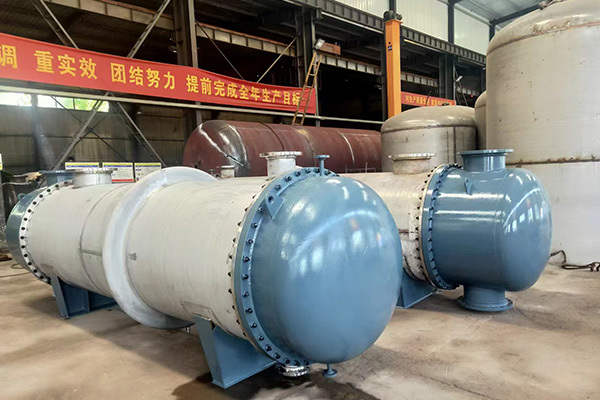
2. Structural design
Laminated structure
Laminated structure design is usually adopted, and the fibers are laid in a plastic matrix in a specific direction and order according to different usage requirements. This laminated structure can effectively withstand internal pressure and reasonably distribute stress in the circumferential and axial directions. For example, when storing high-pressure gas, by optimizing the laminated structure, it can be ensured that the container will not break or deform when subjected to high pressure.
Interface and accessories
The interface and accessory parts of the container are specially designed to ensure that the connection with other equipment is firm and well sealed. Whether it is the connection of the inlet and outlet valves or the docking with the pipeline system, it can meet the requirements of industrial applications. At the same time, in order to facilitate installation and maintenance, humanized considerations are also made in the structure, such as reserving suitable operating space.
3. Performance characteristics
High strength-to-weight ratio
As mentioned above, its high strength-to-weight ratio is a major advantage. This makes it not only used in the aerospace field, but also in the automotive industry for compressed natural gas (CNG) or hydrogen storage containers, which not only improves vehicle performance, but also meets the needs of lightweight new energy vehicles.
Safety
Although the material is light, strict safety standards are followed during the design and manufacturing process. Through non-destructive testing techniques such as ultrasonic testing and radiographic testing, it is ensured that there are no defects inside the container. And in terms of pressure testing, multiple rounds of overpressure testing are carried out to ensure that the container operates safely and reliably within the specified working pressure range.
4. Application Fields
Energy Industry
It is used to store clean energy such as compressed natural gas and hydrogen, and plays an important role in the storage and transportation of energy.
Chemical Industry
As a storage and transportation container for various corrosive chemicals, it replaces traditional metal containers and reduces the risks and costs caused by corrosion.
Transportation
In aerospace, automobiles and other transportation vehicles, it is used to store high-pressure gas to improve the performance and safety of transportation vehicles.
Fiber reinforced plastic pressure vessels have broad application prospects in modern industry due to their unique material, structure and performance characteristics.
Latest News
Stainless Steel Pressure Vessel: Vertical Buffer & Separation Tank for Industrial Process
This article introduces vertical stainless steel pressure vessels, including their structural characteristics, fabrication standards, core functions and common working scenarios. Manufactured from stainless steel plates, this type of pressure vessel can be used for gas-liquid separation, medium buffering, temporary storage and steady flow regulation under pressure.
2026-09-22
Shell and Tube Heat Exchanger: Tubular Heat Exchanger for Hydraulic Oil Cooling
This article introduces the structure, working principle, advantages and application scope of shell and tube heat exchangers. This tubular cooler adopts copper heat transfer tubes inside the shell, featuring reliable pressure resistance and good heat transfer performance, commonly used for cooling hydraulic oil and lubricating oil in machinery.
2026-09-22
Industrial Plate Heat Exchanger: Features, Performance and Application Benefits
Plate heat exchangers have become mainstream thermal exchange equipment in modern industrial systems due to their compact structure, outstanding heat transfer performance and flexible modular design. This article focuses on the performance characteristics, structural design, practical advantages and diverse industrial applications of industrial plate heat exchangers, providing a professional reference for industrial heating, cooling and waste heat recovery projects.
2026-09-22
This article introduces the structural features, working principle, core advantages and application scenarios of demountable plate heat exchangers. Featuring high heat transfer efficiency and convenient disassembly & maintenance, this equipment is widely used in various industrial heat exchange processes.
2026-09-22
GET A FREE QUOTE
If you are interested in our products and services, please contact us or leave us a message, we will serve you wholeheartedly
CONTACT : MR. GAO
Add : Yanbei Street, Qihe County, Dezhou City, Shandong Province


CONTACT : MR. JIAO
Add : Yanbei Street, Qihe County, Dezhou City, Shandong Province

Copyright : Shandong Raystone Chemical Material Co. , Ltd. Powerby : 300.cn jinan2 SEO BUSINESS LICENSE