
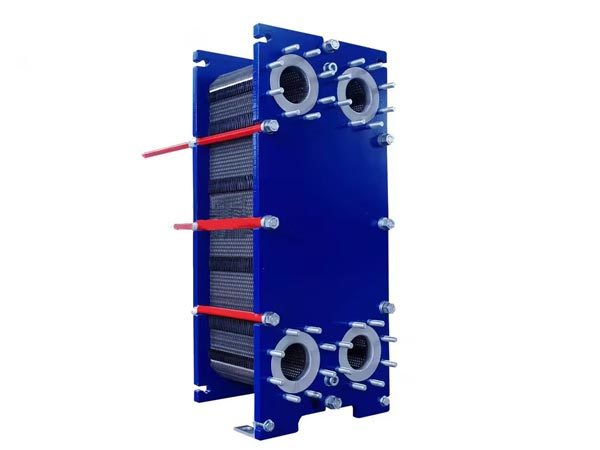
Armstrong heat exchanger
Release time:
2025-02-05
Armstrong heat exchanger is a device that excels in the field of heat exchange and is widely used in many industrial and commercial fields.
Armstrong heat exchanger is a device that excels in the field of heat exchange and is widely used in many industrial and commercial fields.
1. Structural design
Armstrong heat exchanger has a unique and sophisticated structure. Its core components include heat exchange tubes, tube sheets, shells, etc. The heat exchange tubes are made of high-quality metal materials, such as copper and stainless steel, which have good thermal conductivity to ensure that heat can be efficiently transferred inside and outside the tubes. The tube sheet plays the role of fixing the heat exchange tubes and ensures the seal between the heat exchange tubes and the shell. The design of the shell has various forms according to different application scenarios, such as a cylindrical shell. This structure can withstand a certain pressure and provide a stable space for the internal heat exchange process.
2. Working principle
The heat exchanger works based on the principles of heat conduction and heat convection. When two fluids of different temperatures flow in the heat exchange tube and the shell respectively, the heat of the high-temperature fluid is transferred to the low-temperature fluid through the tube wall of the heat exchange tube. In this process, heat conduction occurs at the tube wall, while heat convection causes the fluid to flow in their respective channels, continuously taking away or replenishing heat. For example, in an air conditioning system, the refrigerant flows in the heat exchange tube, and the indoor air flows on the shell side. The low temperature of the refrigerant causes the heat of the indoor air to be transferred to the refrigerant, thereby achieving the effect of indoor cooling.
3. Performance characteristics
Efficient heat exchange
Armstrong heat exchanger can achieve efficient heat exchange due to the use of high-quality heat exchange materials and reasonable structural design. In industrial production, such as chemical and petroleum refining processes, it can quickly cool or heat the process fluid to the required temperature to improve production efficiency.
Compactness
Its structure is relatively compact and occupies little space. This feature makes it easy to install and use in places with limited space, such as power systems on ships and air-conditioning rooms in small commercial buildings.
Reliability
Armstrong heat exchanger has undergone rigorous quality testing and engineering verification. It has good sealing performance, can prevent fluid leakage, and can stably maintain heat exchange efficiency during long-term operation. In some industrial environments with continuous production, such as the cooling system of a power plant, it can operate reliably for a long time, reducing the frequency of equipment maintenance and replacement.
Customizability
Armstrong heat exchangers can be customized to meet the needs of different users. Whether it is the heat exchange area, inlet and outlet pipe diameters, or connection methods, they can be adjusted according to specific application requirements. For example, in the food processing industry, heat exchangers that meet the needs can be customized for different processing techniques and plant layouts.
4. Application Fields
Armstrong heat exchangers are widely used in many fields such as HVAC, chemical, petroleum, food, and pharmaceuticals. In the HVAC field, they are used for temperature regulation of buildings; in the chemical and petroleum industries, they participate in the heating and cooling links in various process flows; in the food and pharmaceutical industries, they meet the temperature control needs of temperature-sensitive production processes.
Latest News
Stainless Steel Pressure Vessel: Vertical Buffer & Separation Tank for Industrial Process
This article introduces vertical stainless steel pressure vessels, including their structural characteristics, fabrication standards, core functions and common working scenarios. Manufactured from stainless steel plates, this type of pressure vessel can be used for gas-liquid separation, medium buffering, temporary storage and steady flow regulation under pressure.
2026-09-22
Shell and Tube Heat Exchanger: Tubular Heat Exchanger for Hydraulic Oil Cooling
This article introduces the structure, working principle, advantages and application scope of shell and tube heat exchangers. This tubular cooler adopts copper heat transfer tubes inside the shell, featuring reliable pressure resistance and good heat transfer performance, commonly used for cooling hydraulic oil and lubricating oil in machinery.
2026-09-22
Industrial Plate Heat Exchanger: Features, Performance and Application Benefits
Plate heat exchangers have become mainstream thermal exchange equipment in modern industrial systems due to their compact structure, outstanding heat transfer performance and flexible modular design. This article focuses on the performance characteristics, structural design, practical advantages and diverse industrial applications of industrial plate heat exchangers, providing a professional reference for industrial heating, cooling and waste heat recovery projects.
2026-09-22
This article introduces the structural features, working principle, core advantages and application scenarios of demountable plate heat exchangers. Featuring high heat transfer efficiency and convenient disassembly & maintenance, this equipment is widely used in various industrial heat exchange processes.
2026-09-22
GET A FREE QUOTE
If you are interested in our products and services, please contact us or leave us a message, we will serve you wholeheartedly
CONTACT : MR. GAO
Add : Yanbei Street, Qihe County, Dezhou City, Shandong Province


CONTACT : MR. JIAO
Add : Yanbei Street, Qihe County, Dezhou City, Shandong Province

Copyright : Shandong Raystone Chemical Material Co. , Ltd. Powerby : 300.cn jinan2 SEO BUSINESS LICENSE